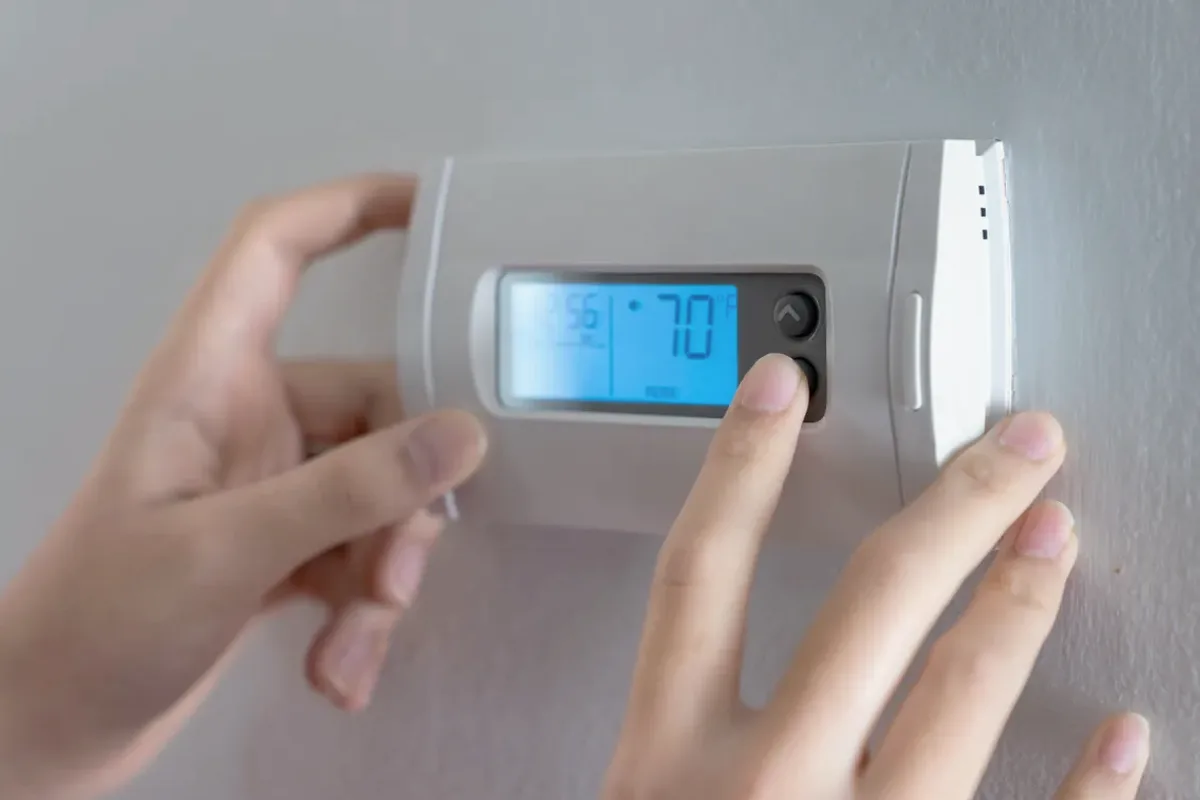
Request thermostat repair & replacement for a property in Chatham. Include the equipment, the problem or planned work, and your location so the request can be reviewed.
How do you decide whether a thermostat needs repair or replacement?
Thermostat service starts by checking whether the problem is with the thermostat's power, temperature sensing, wiring, settings, or communication with the heating or cooling equipment. A displayed temperature that differs from the room, short cycling, or a blank screen can have different causes. Repair may be suitable when a sensor, connection, or other correctable fault is identified. Replacement requires checking the existing control wiring and HVAC system compatibility, especially when considering programmable or smart features.
Note the thermostat model, displayed temperature, symptoms, and whether the problem affects heating, cooling, or both. Assessment can check sensor placement, power, wiring, transformer output where relevant, and whether the equipment responds to a call. For a replacement, confirm the HVAC system and control wiring support the proposed thermostat. These findings separate a repairable control issue from an incompatible or unsuitable unit.
Sensor location, temperature readings, and short cycling
Thermostat power, wiring, transformer, and equipment calls
Repair versus programmable or smart thermostat replacement
Assessment and Scope
Questions for the Proposed Work
01
Investigate temperature and cycling symptoms
Temperature swings may result from a sensor that is inaccurate or poorly located, but room conditions and equipment operation can also contribute. Short cycling can involve the thermostat's call, its wiring, system controls, or the equipment itself. Comparing the displayed reading with the room and checking when calls begin and end helps narrow the cause. A thermostat should not be replaced solely because the temperature feels uneven until the control and connected system have been assessed.
02
Test power and the call to the system
A blank display or an unresponsive heating call may arise from the thermostat, its power source, wiring, transformer, or connected equipment. Proper diagnosis checks voltage and follows the control call through the relevant circuit; internal electrical testing is not homeowner work. The observed readings matter because they show whether the thermostat is failing to issue a call or whether the system is not responding to one. That distinction guides repair scope.
03
Check compatibility before upgrading
A programmable or smart thermostat may offer scheduling or remote features, but compatibility depends on the connected heating and cooling equipment and its control wiring. Confirm the system type, required terminals, and any control features before selecting a replacement. If testing identifies a battery, sensor, or wiring fault, repair may be appropriate. Replacement is more relevant when the thermostat is unsuitable, incompatible, or no longer functions as intended, rather than as an automatic response to every comfort complaint.
Compare the next step
Ask whether a remote office sensor is supported and how its reading will be used: as the main control temperature, an average, or an occupancy-based choice. Have the contractor explain the consequences for other rooms. Agree on the intended workday schedule and test it with the actual equipment.
Thermostat wiring is not universal. Do not connect wires by colour alone or work on energized wiring; a compatible control must be configured for the equipment it serves.